
A puppy is born with a cleft palate due to a congenital condition that occurs when the tissues forming the roof of the mouth did not fuse completely while developing in the womb. This leads to a gap or cleft whose depth and circumference can differ. Most puppies having this condition have problems with drinking, eating, and weight gain as the cleft makes it difficult to nurse. The purpose of this article is to discuss, in depth, all aspects of this condition, including; a puppy’s health yield causes and symptoms together with their diagnostic and management care strategies and overall approach towards ensuring holistic wellbeing. This way, readers are able to understand similarly and meaningfully cleft palate in puppies considering how to solve their distinctive issues appropriately.
What is a cleft palate in puppies?

Anatomical definitions for palatoschisis and cheiloschisis
Cleft palate, or palatoschisis, is defined as a congenital deformity that affects puppies, in which the tissues constituting the palate fail to completely fusion during development. This condition may involve the hard palate, which is the bony anterior portion of the palate as well as the soft palate, which is the muscular posterior part of the palate, or both components. On the other hand, cleft lip, or cheiloschisis, describes a split or notch in the upper lip and may or may not be associated with cleft lip. The combination of these deformities results in a communication between the oral cavity and the nasal cavity which may result in problems such as ineffective nursing, respiratory difficulties, and increased risk of infection. Also, realizing the description of these defects is essential in the diagnosis and management of puppys care health problems with these spinal dysraphisms.
Causative and predisposing factors
The primary consideration for puppies born with cleft palate and cleft lip is congenital malformations which are the result of abnormal embryonic growth. These issues often stem from genetic factors where specific breeds or lines may have higher incidence rates for such defects. Also, environmental influences related to the mother’s pregnancy are important. The presence of teratogens—medications, lack of required nutrition, or poisonous substances that interfere with fetal development—greatly increases the risk of these aberrations. Some studies also indicate that stresses on expecting mothers, or certain infections during vital stages of the fetal growth cycle, can lead to this problem. Knowing these factors provides the basis for implementing safeguards through genetic testing and optimal care of the mother to help reduce the incidence of cleft palate and lip in puppies.
Types of cleft palates: Hard and soft palate involvement
Different parts of the palate can be affected by cleft palate, including the hard palate, the soft palate, or both. The portion of the palate that forms the roof of the mouth is the hard palate which is bony in nature, and the soft palate is located at the rear of the oral cavity, and consists of soft, movable tissue. A cleft on the hard palate presents as an aperture on the bony framework, which can tremendously hinder feeding and cause problems such as nasal vomiting. Likewise, a cleft on the soft palate disrupts the normal functioning of the mouth and pharynx which usually leads to difficulty in swallowing and breathing. Puppies may be born with involvement of the hard palate or soft palate or any combination of these two with the degree of presentation varying accordingly. It is important to know these types to devise a specific surgical and treatment plan for puppies that require them.
How common are cleft palates in dogs?

Occurrence of Cleft Palate across Various Breeds of Dogs
Different breeds of dogs show different occurrence frequencies for Cleft Palate. Brachycephalic breeds such as Bulldogs, Boxers, and Pugs exhibit higher occurrence rates than other breeds. This increased risk is, perhaps, the result of their classic craniofacial morphology, which has a risk of developmental anomalies genetically. Although exact rates vary by studies and areas, it is largely accepted that most breeds with closed gene pools exhibit these defects. There is a low occurrence of Cleft Palate in mixed breeds as compared to purebreds. To implement effective preventative policies such as genetic testing and well thought out breeding decisions, it is important for the breeders and veterinarians to understand breed prevelence.
Genetic Accessibility Associated with Cleft Palates
In dogs, the prevalence of cleft palates within certain breeds appears to be highly influenced by hereditary factors. In my opinion, some mutations or family characteristics seem to have a high probability of occurrence, especially among breeds more susceptible to such conditions like brachycephalic dogs. When I deal with breeds that are certainly at risk, I always try to stress the value of genetic testing. Knowing who the potential bad gene carriers are makes it possible to strategize the breeding efforts so that the undesirable genes are not passed on to subsequent generations. I personally believe that there should be more collaboration in dealing with genetic predispositions and the general health of dogs between breeders and veterinarians.
What are the signs and symptoms of a cleft palate in puppies?

Observable indicators of cleft lip and palate abnormalities
The most noticeable sign of cleft palate in a puppy is an opening in the roof of the mouth, which can be located in different areas and differ in size. This is practically visible in any casual oral inspection. A cleft lip may be externally appreciated as a split or division in the upper lip. Other abnormalities include having a problem in nursing as affected puppies are unable to create a seal around the mother’s nipple and consequently, fail to put on weight and malnourished. During feeding, milk or formula can escape from the nostrils because of the abnormal communication between the oral and nasal chambers. In addition, due to the defect that permits the entry of fluids and food into the nasal cavities, persistent infections of the respiratory system and nasal discharge are commonplace. Breeders and veterinarians must be able to identify and treat these abnormalities early for medical or surgical procedures to be undertaken to ameliorate the quality of life of the puppy.
Nasal discharge and feeding difficulties
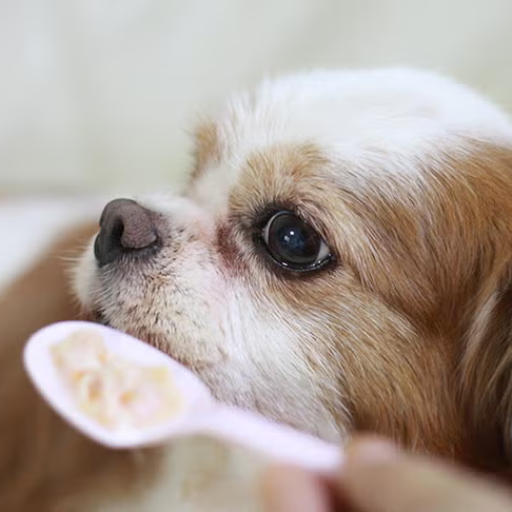
Nasal discharge alongside feeding difficulties are both prominent signs of cleft palate in puppies. Due to their inability to obtain a good seal while feeding, puppies with a cleft palate often have a difficult time nursing effectively. This frequently leads to a lowering of caloric consumption and may result in an inhibited growth pattern or an inability to achieve normal weight gain. Such puppies tend to show signs of hunger or irritability, even with frequent attempts to feed them. In addition, milk or formula may pass through the nose because the oral cavity is not fully separated from the nasal cavity. This nasal discharge adds an additional layer of complexity to feeding and increases the risk of aspiration pneumonia— a grave condition in which liquids are drawn into the lungs leading to inflammation and infection. Recognizing these feeding problems early on is essential because they require some form of nutritional intervention. These may include tube feeding or specialized bottles for puppies with orofacial deformities. Swiftly addressing these issues aids in averting secondary complications and improving the overall prognosis in affected puppies.
Potential for aspiration pneumonia in puppies with orofacial abnormalities
Aspiration pneumonia occurs when a person inhales liquid or any other foreign substance into their lungs instead of consuming it. This is particularly harmful in puppies suffering with orofacial abnormalities where their oral cavity and nasal cavity are not completely separated which makes it easy for food or milk to enter the airway. In such instances, it becomes imperative to identify feeding problems as early as possible. If I came across such cases, my solution would be to employ specialized feeding techniques such as tube feeding or using specially designed bottles that aid in feeding while preventing aspiration and ensuring the puppy receives adequate nutrition. Prompt and appropriate treatment can significantly improve the prognosis and help prevent complications.
How is a cleft palate diagnosed in puppies?

Veterinary examination and oral cavity inspection
A cleft palate in puppies is often diagnosed during their veterinary examination, with particular emphasis given to the mouth area. The veterinarian will perform a brief search for any openings on the hounds soft palate. These gaps may have a wide range depending upon the intraventricular and intracardiac communications between the heart and the lungs. Have the palpation of the oral cavity for more subtle deficiencies and malformations are performed. In order to visualize the defect, make a diagnosis, and plan treatment, auxiliary imaging methods in the form of dental X-rays or CT scans can be conducted in ex- treme or obscure situations.
Imaging techniques for confirming cleft palate
As a frequent adjunct modality, I use imaging techniques to confirm the diagnosis of a cleft palate. X-ray imaging of the jaw and oral cavity is especially informative in relation to the parts of the defected area. In more complicated instances, I think of applying CT scanning, which gives precise three-dimensional representations of the region of interest. Such sophisticated imaging procedures enable accurate visual assessment of the dimensions, depth and protrusion of the defect in relation to the surrounding structures and tissues. With that information, I can work out an appropriate treatment plan for the puppy. Where the physical examination may not suffice, these imaging techniques help elucidate the pertinent issues.
What treatment options are available for puppies with cleft palates?

Reconstructive surgery for cleft palate and lip lesion
The first approach to managing cleft palate and lip in puppies is surgical reconstruction. This surgery involves closing gaps in the affected parts by rearranging the tissues in a manner that would restore the normal functionality of the area. Ageing is an important aspect that needs to be considered, as surgical intervention is mostly done once the puppy is around three to four months old. This is the optimal time where the tissues will be strong enough to heal properly post-operation. Post operative procedures includes monitoring for pain and infections, along with other complications to ensure the greatest chance of recovery.
Techniques of management without surgery
Even though surgical repair is the main treatment approach, non-surgical options can still help manage the problem. These options are particularly useful for very young puppies or pre-operative patients. These techniques aim at maintaining sufficient nutritional intake while decreasing the chances of aspiration pneumonia. Often, very specialized tube and bottle feeding is necessary to keep milk or food from entering the nasal cavity. In other cases, feeding needed to be controlled so the patient could be contained to determine complications and hygiene needed to be controlled with oral and nasal areas. Non surgical techniques and approaches are not restorative but serve assistive purposes in regard to enhancing a puppy’s life and maintaining their state of health until surgery can be performed.
Optimal nutrition and feeding methods
While contemplating cases where surgical correction cannot be performed right away, I would try to achieve optimum health and nutrition while minimizing any associated risks. For instance, I would concentrate more on specialized feeding techniques which include the use of feeding tubes and specially shaped bottles that enable the infant to feed without milk or food entering the nose. This takes care of the risk of developing aspiration pneumonia, which is a very important concern. Moreover, I would try to prevent secondary infections by carefully cleaning oral and nasal cavities to maintain hygiene. While these approaches are not a cure, they should be deemed as necessary for improving the animals physiological and psychological wellbeing and preparing them for future surgical treatment.
Reference sources
Frequently Asked Questions (FAQs)
Q: What is a congenital cleft palate in puppies?
A: Cleft Palate is congenital defect characterized by a failure of fusion of the palatine bones during development resulting in an orifice in the roof of the mouth. Talk to your veterinarian for diagnosis and treatment of this and similar conditions as it may occur in both kits and pups.
Q: How is a cleft palate diagnosed in puppies?
A: Usually, physical examination of the puppy’s mouth is enough to determine the presence of cleft palate. Other symptoms are trouble sucking which results in milk coming from the nose, said pup sneezing and coughing, and sometimes imaging techniques are needed to assess the size of the cleft palate.
Q: What are the treatment options for a cleft puppy?
A: For cleft puppies, the most common surgical repair of a cleft lip or cleft palate is performed. This is usually only performed on pups who are 3-4 months old. Prior to the operation, the primary management of cleft lip and palate involves careful cleft feeding and monitoring for complications.
Q: How is feeding managed for a puppy with congenital cleft?
A: Feeding a puppy with a cleft needs more than ordinary care. They might require tube feeding or specially designed bottles that prevent milk from being aspirated into the nose. Careful feeding, often at intervals of 2 hours, allows for adequate calories, fluids, and rest to be provided.
Q: Can pet insurance cover the treatment of cleft palate in puppies?
A: Certain pet insurance plans might cover the treatment for cleft palate, particularly if it is a congenital defect. Nevertheless, such conditions often come with a lot of fine print, so it is advised to reach out to your insurer for clarification on congenital defect cases and also, the specifics around the cleft palate repair.
Q: Who performs cleft palate surgery for puppies?
A: While any veterinarian can operate on a puppy with a cleft palate, a board-certified veterinary surgeon or a dentistry veterinarian with specialization in oral surgery will be needed to do this most effectively. These experts have the necessary skills to deal with the complexities involved in cleft palate repair to ensure healing for the pup.
Q: What is the success rate for cleft palate repair in puppies?
A: One difficult and troublesome aspect of cleft palate surgery is the success rate. This varies with the severity of the defect as well as the age of the puppy. In the normal developed canine populace, the repair of cleft palates through surgery allows almost all dogs with cleft palates to function normally, but the procedure may need to be repeated a number of times due to the continuous nature of the management involved.
Q: Are there any long-term considerations for puppies born with a cleft palate?
A: Some puppies who go through the cleft palate repair procedure may need special dental care for the rest of their lifetime. They also need to go through periodic veterinarian visits to monitor complications and detect any retakes of the defect palatine. Besides these issues, there are some dogs with deep-seated respiratory problems who need management and those suffering from difficulties with feeding after surgery require changes to be made too.
Q: Can cleft palates in puppies be prevented?
A: There is some good news and bad news in the prevention paradigm pertaining to cleft palates in puppies. Some pups may have a pathological cleft palate that cannot be aborted or removed. During gestation, proper nutrition and avoiding some drugs can manage some prevention ingestions. Additionally, taking measures at responsible breeding and carrying out genetic tests on the parent dogs may lessen chances of them developing congenital cleft palates in puppies.